Animal Liberation and the Royal Society for the Prevention of Cruelty to Animals are again calling for the mandatory installation of CCTV cameras in all Australian abattoirs.
SEED AUDIO 2.0 AI AUDIO GENERATOR
Seed Audio 2.0 AI
Audio Generator for Sound Scenes
Generate complete audio scenes from a text prompt with dialogue, distinct voices, ambience, background music, and sound effects. Add optional audio or image references, then play, download, and refine the result.
Scene prompt225 / 2048
Additional SettingsCustomize your input with more control.
Seed Audio 2.0 resultDEMO
MIDNIGHT RADIO · DEFAULT AUDIOREADY TO PLAY
SEED AUDIO 2.0 EXAMPLES
Explore Seed Audio 2.0 Examples
Six examples featuring different voices, scenes, and delivery styles.
The U.S. says it has received information from an undisclosed source that specifically mentions the use of suicide bombers to will blow up prominent landmarks in Ethiopia and Kenya.
I was chatting with an old classmate just now, reminiscing about the silly things we did as kids. We laughed so hard, tears almost came out. I really miss those days!
I feel like I’m lost in the darkness and can’t find a way out anymore.
If you’d ever treated me like a human being, would they have dared to do this?
The tower caused minor discontent, because it blocked sight lines of Central Park.
HOW TO USEHow to use Seed
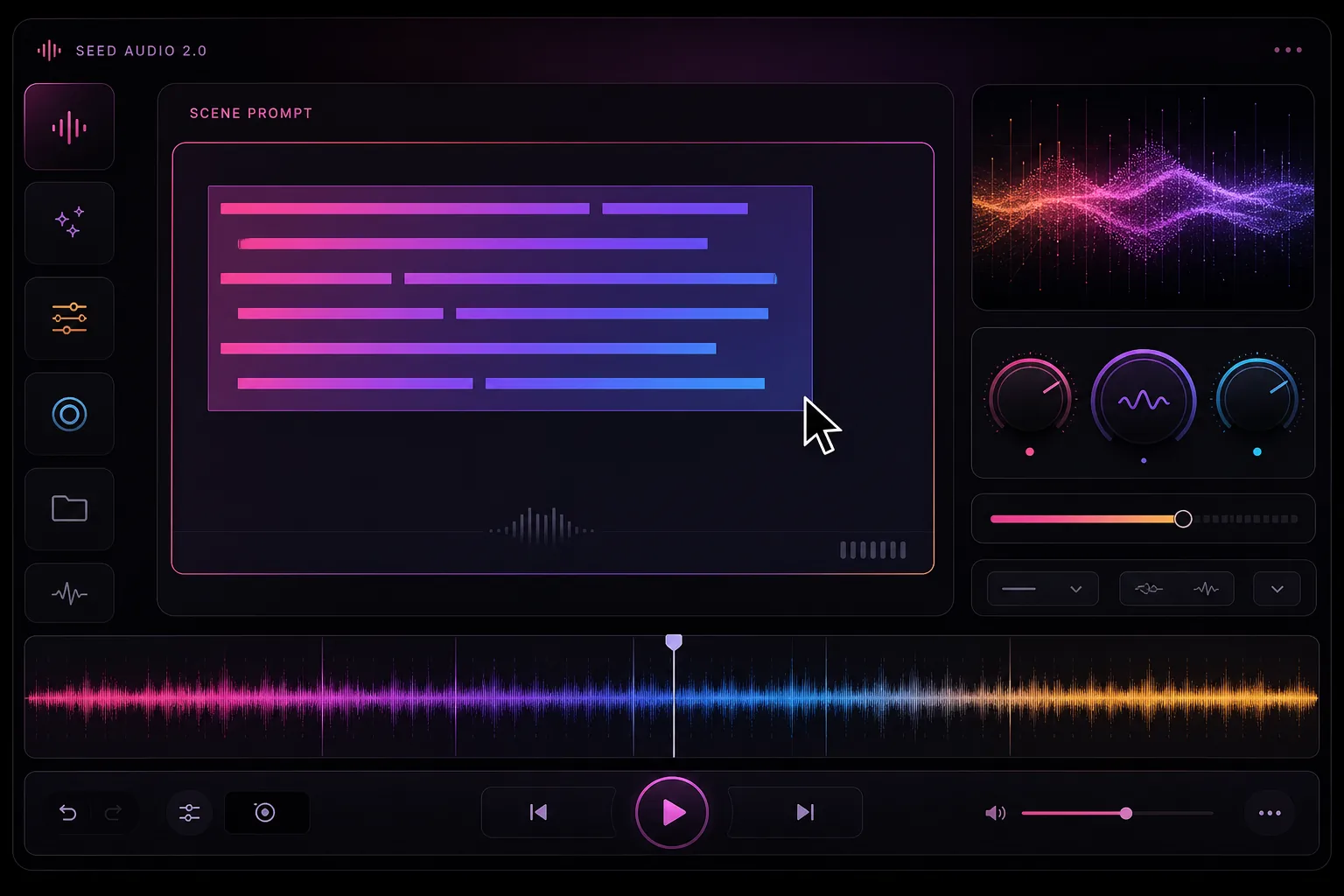
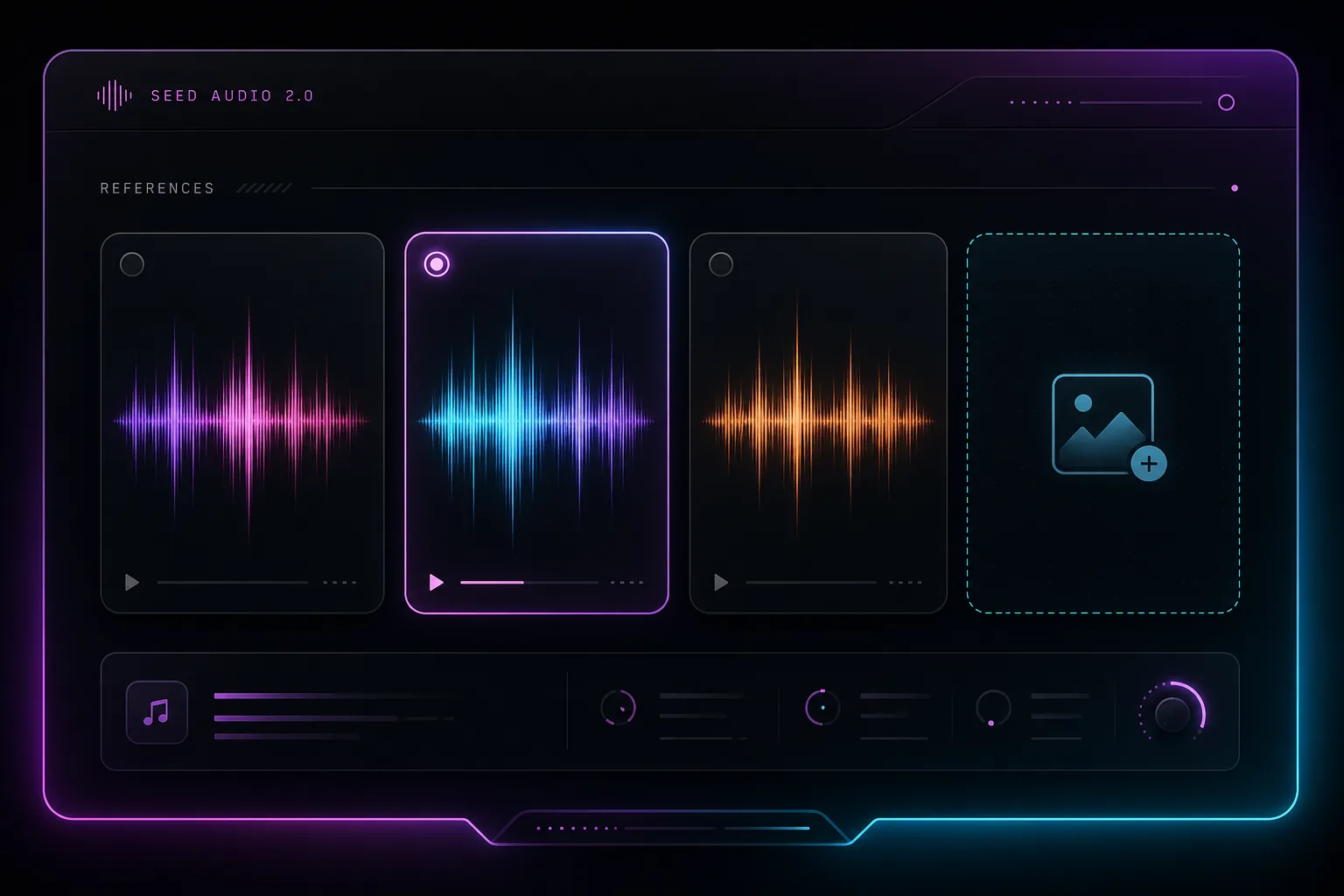
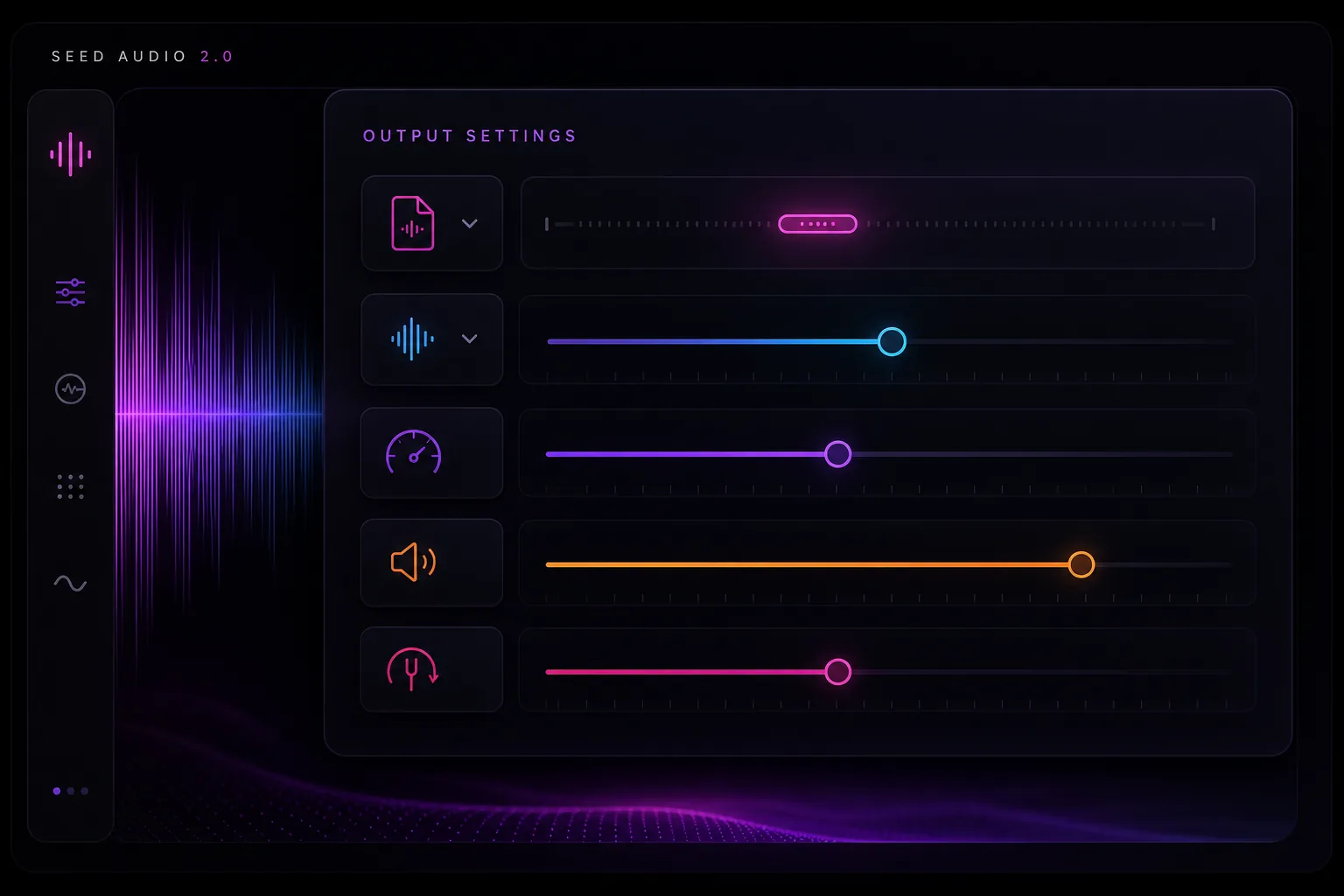
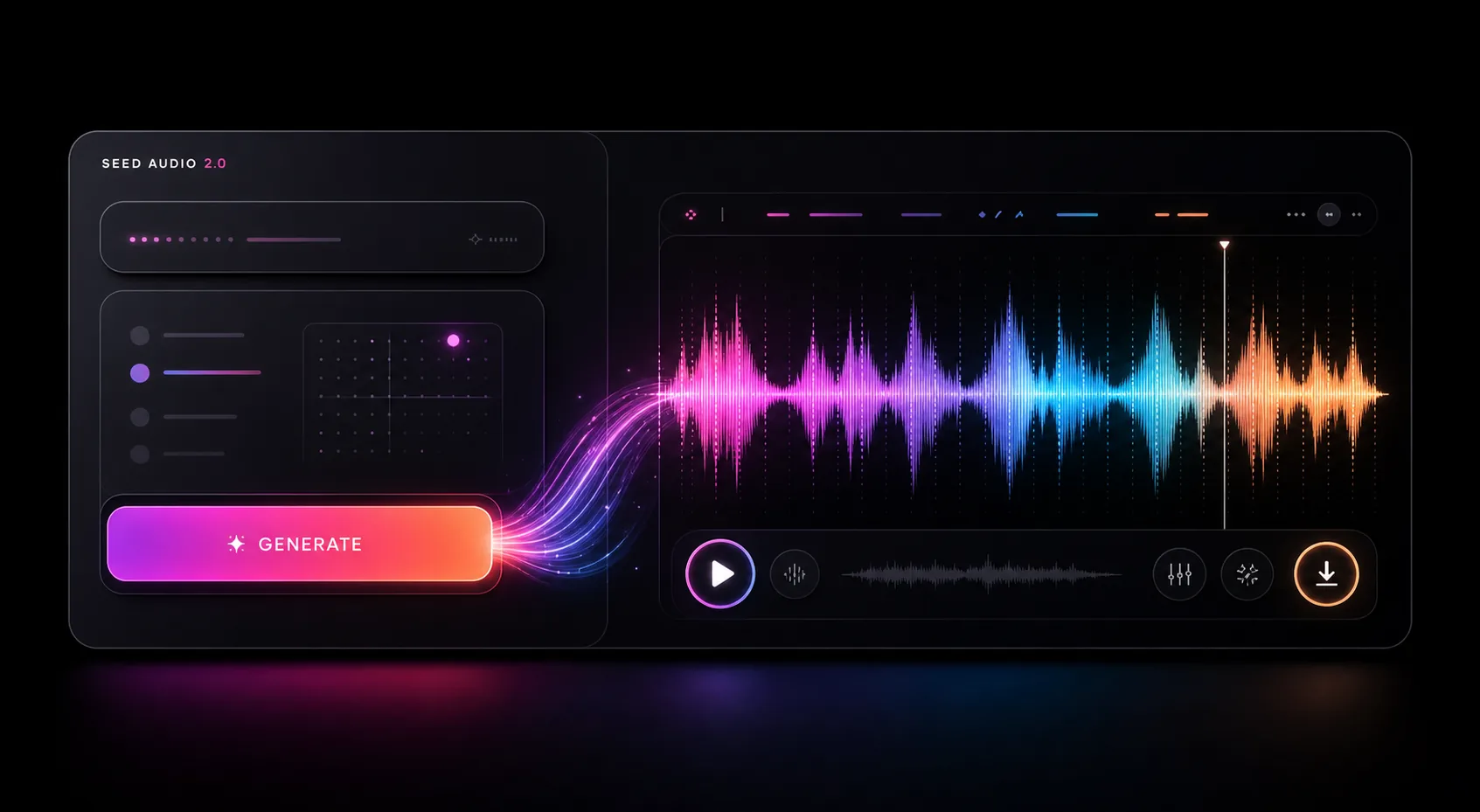
How to use Seed
Audio 2.0 online
Start a Seed Audio 2.0 project with the scene and speakers. Add a reference only when it helps, choose the output settings, then listen and revise the prompt.
Write the scene
Say who is speaking, where they are, how they sound, and when the important noises happen.
Add a reference if needed
Use a short audio clip for voice or delivery, or an image for the setting and mood.
Set the output
Choose the file format and sample rate. Adjust speed, volume, or pitch only when the scene calls for it.
Listen, then change one thing
Download a good take. If it misses, revise one detail instead of rewriting the whole prompt.
PROMPT FORMULA
Open generator →Scene + speaker + emotion + language + ambience + music + sound effects + timing.
TROUBLESHOOTING
Refine Your PromptWhen a Scene Needs Work
When a generated scene feels unclear, crowded, or poorly timed, identify the sound layer causing the issue and refine that instruction instead of rewriting the entire prompt.
Fix unclear voices
Name each speaker, include exact dialogue, and specify tone and pace. Ask for speech to stay clear above the background.
Reduce muddy background audio
Use one main ambience layer, lower the music, and keep only the sound effects that support the scene.
Improve timing and transitions
Write cues in playback order. State when sounds enter, where pauses belong, and whether the scene should fade or end on a final cue.
SEED AUDIO 2.0 TECHNOLOGY
More Than Script Reading with Seed Audio 2.0
A single Seed Audio 2.0 prompt can cover the performance and the room around it—from two people talking to rain, traffic, music, or a door closing on cue.
Multi-speakerVoice continuity for longer generated scenes
Text / image / audioMultimodal direction for Seed Audio 2.0
All-in-one audio generation
Use Seed Audio 2.0 to compose multiple sound layers at once instead of stitching voice, music, ambience, and effects across separate tools.
Emotion and accent control
Guide Seed Audio 2.0 tone, emotional delivery, dialect, and natural accents while keeping recurring voices recognizable.
Scene ambience and music
Let Seed Audio 2.0 generate environmental beds, room tone, weather, crowds, and background music alongside dialogue.
Longer audio scenes
Build sustained Seed Audio 2.0 scenes for dialogue, narrative, ambience, and music-backed sequences.
WHERE IT FITSCreate Audio for Videos, Games,
Create Audio for Videos, Games,
Lessons, and Ads with Seed Audio 2.0
Use Seed Audio 2.0 early, when you need to hear an idea before booking voices, choosing music, or building the final mix.
▣
Short film sound design
Draft dialogue, emotional beats, foley, ambience, and music for storyboards or pre-visualization.
✦
Marketing creatives
Create campaign-ready Seed Audio 2.0 directions for product demos, social clips, and localized ads.
⌁
Game and XR prototypes
Prototype ambient loops, character voices, UI sounds, and cinematic moments before a final audio pass.
◉
Learning content
Build scenario-based lessons, character conversations, and immersive explainers with spatial sound cues.

DIALOGUEMulti-character delivery with emotional tone
AMBIENCERain, traffic, rooms, crowds, and natural beds
FOLEYFootsteps, impacts, doors, texture, and timing

PRICINGChoose the right
Choose the right
Seed Audio 2.0 credit pack.
Buy credits once and use them whenever you create. There are no monthly or yearly subscriptions.
5 credits / minuteOne-time purchase · Valid for 365 days
✦Starter credits
23% OFFCREDIT PACK
$9.90
A lightweight top-up for personal projects and quick audio drafts.
120credits
24total audio minutes
- ✓120 Seed Audio 2.0 credits
- ✓Up to 24 generated audio minutes
- ✓Text, audio, and image references
- ✓Audio generation history
- ✓Credits valid for 365 days
- ✓Max 2 minutes per generation
✦Creator credits
25% OFFMOST BALANCED
$29.90
The best balance for creators producing complete audio scenes regularly.
500credits
100total audio minutes
- ✓500 Seed Audio 2.0 credits
- ✓Up to 100 generated audio minutes
- ✓Text, audio, and image references
- ✓Audio generation history
- ✓Credits valid for 365 days
- ✓Max 2 minutes per generation
✦Studio credits
33% OFFBest value
$99.90
The strongest value for teams and high-volume audio production.
2,000credits
400total audio minutes
- ✓2,000 Seed Audio 2.0 credits
- ✓Up to 400 generated audio minutes
- ✓Text, audio, and image references
- ✓Audio generation history
- ✓Credits valid for 365 days
- ✓Max 2 minutes per generation
NEW ACCOUNT BONUS10 free credits
Enough to create approximately two short audio generations.
USAGE STANDARD5 credits per minute
Credits are deducted only when you generate audio.

FAQs
Seed Audio 2.0 FAQ
Practical answers for creators who want to understand Seed Audio 2.0, generate AI audio, and manage credits.
What is Seed Audio 2.0?⌄
Seed Audio 2.0 turns a written scene brief into an audio draft. The brief can include speakers, setting, pacing, music, and key sound effects.
What inputs does Seed Audio 2.0 support?⌄
Begin with a text prompt and optionally guide the result with reference audio or an image. Describe speakers, emotion, ambience, music, and sound events.
Why upload an image to Seed Audio 2.0?⌄
A scene image can establish mood, location, energy, and environmental context when the generated audio should match a specific world.
How long can each Seed Audio 2.0 generation be?⌄
Each generation supports up to 2 minutes of audio. Longer projects can be created as separate scenes.
How are Seed Audio 2.0 credits calculated?⌄
Generation uses 5 credits per minute. Packs of 120, 500, or 2,000 credits equal approximately 24, 100, or 400 minutes.
Can I generate audio on this website?⌄
Yes. Enter a scene prompt in the live workspace and select Generate Audio. Successful results appear in the audio player.
Why can a Seed Audio 2.0 generation fail?⌄
A request may fail because of an incomplete prompt, unsupported input, temporary provider availability, or an upstream account configuration issue.
What is Seed Audio 2.0 best for?⌄
It is most useful when speech and setting need to be drafted together—for example a podcast scene, short ad, game moment, or audio story.
Can I use Seed Audio 2.0 output commercially?⌄
Commercial usage depends on the terms attached to your account and credit pack. Review the applicable usage rights before publishing.
Are the credit packs subscriptions?⌄
No. Every purchase is a one-time credit pack with no recurring monthly or yearly charge. Purchased credits remain valid for 365 days.

CREATE YOUR FIRST SCENE
Turn your idea into a completeSeed Audio 2.0 scene.
Describe the voices, mood, music, and sound effects you want. Generate your first take in minutes—no recording setup required.
Try Seed Audio 2.0 free →